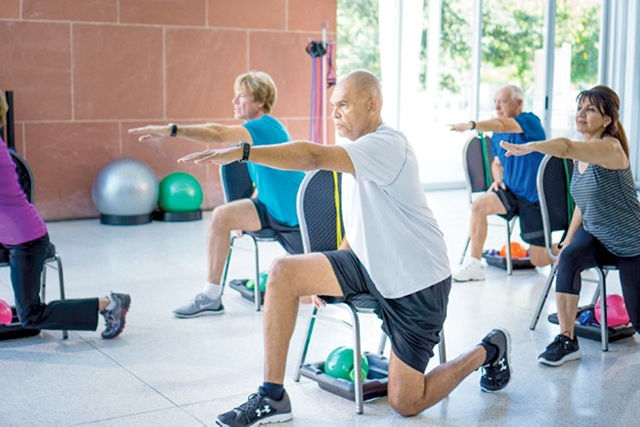
What Does “Getting Fit” Really Mean?
- Amanda Coombe
- Jan 4
- 3 min read
When I speak with new clients, leaders, or teams about resilience, one of the most common statements I hear is:“I just want to get fit.”
It sounds simple enough, but if you ask ten people what “getting fit” means, you’ll likely get ten very different answers.
For some, it’s about running further or faster. For others, it’s being strong enough to pick up the kids or grandkids. And for many professionals, it’s about having the energy and capacity to perform at a high level, without burning out.
The truth is, fitness isn’t one-size-fits-all. Just like resilience in leadership or education, fitness needs to be defined in terms of what matters most to you, your context, and your goals.

The Many Faces of Fitness
“Being fit” can mean:
Improving cardiovascular fitness, having the endurance to keep going without feeling drained.
Building flexibility, the ability to move freely and adapt with ease.
Developing strength, not just muscle size, but the capacity to carry life’s physical and mental loads.
Enhancing function, moving with confidence in ways that mirror the demands of daily life.
Just as organisations require different strategies depending on their challenges, individuals need tailored approaches to reach the outcomes that matter most.
Fitness as Resilience Training
Cardiovascular fitness ‘your endurance’.
Endurance is what keeps your energy steady during demanding weeks. A healthy heart and lungs allow you to perform under pressure without crashing. Whether it’s walking, swimming, rowing, or cycling, the goal isn’t punishment but building stamina for the long run.
Flexibility ‘your adaptability.
Flexibility is about more than hamstrings. It’s about your bodies and mind’s ability to adapt to new positions, roles, and challenges. When you stretch, you’re literally training your nervous system to release tension and allow new movement, a perfect metaphor for leadership agility.
Strength ‘your capacity’.
Strength training protects joints, builds strong bones, reduces injury risk, and gives you the confidence to move through life with power. Whether you’re aiming for muscular endurance (sustaining repeated efforts) or hypertrophy, growing muscle size, strength creates the backbone of resilience, in body and in mindset.
Functional movement ‘your real-world readiness’.
Fitness that doesn’t translate to daily life isn’t resilience, it’s repetition. Functional training mimics everyday actions: squats for standing and lifting, balance drills for stability, and regressions for rehabilitation. This is about training the body and brain to trust itself again, so that confidence becomes the default.
Fit for What?
Here’s the real question: Fit for what?
Fit to run a board meeting without mental fatigue?
Fit to manage the demands of a classroom and still have energy left at home?
Fit to carry shopping bags, luggage, or even the grandkids without hesitation?
Fit to enjoy travel, holidays, or sports without worrying about injury?
Fitness, like resilience is contextual. It’s about preparing for the life you want to lead, the challenges you need to face, and the responsibilities you choose to carry.
The Continuum of Fitness and Resilience
Fitness isn’t a fixed point. It’s a continuum that evolves as you progress. At times, the focus may be strength. At others, it may be flexibility, endurance, or recovery. The key is recognising that your approach must adapt as you do, just as resilient organisations evolve in response to shifting environments.
So, the next time you find yourself saying, “I want to get fit,” take a moment to define it.
What does being fit allow you to do?
Where in your life do you want more capacity, confidence, or adaptability?
How will fitness support not just your body, but your resilience in leadership, work, and life?
Because in the end, fitness isn’t just about your muscles. It’s about creating the energy, mobility, and strength to thrive in all areas of life, no matter what comes your way.
✨ True fitness is resilience in action. It’s not about doing more, but about preparing your body and mind to handle what matters most.